The Freedom Rolling Blog
A Freedom Rolling Thanksgiving
Fivescore and fourteen days ago, a quarter of an aspiring four-father, his wife, and their pooch set off on a fantastic voyage to seek pilgrimage in a not-so-new world.
Facing oppression from a ruthless private and public oligarchy, along with a burgeoning loss of cultural heritage, despite several cries to let their people go, these pilgrims knew the time for an exodus approached. Supplied with a Jayco as their vessel and a Ford as their power, they whisked about to test the mettles of their resolve. Arming themselves with the knowledge of their abilities, and lack thereof, the first three, then four, pilgrims made final preparations to abandon what they held dear to follow their internal compass.
Timings and events, both internal and external, made for an arduous voyage. One of the pilgrims passed on at the start, with her spirit remaining immortalized by the surviving three. The grief struck upon these survivors necessitated a hastily crammed vessel. Having to choose the most important of belongings to carry, along with facing the tribulations that came with depleted company to the brink of mutiny, the pilgrims established their new allegiances and made settlement to prepare for the winter.
Long-term settlement seemed a paradise for these pilgrims, with ocean breezes and beautiful sunrises. This was all short-lived, as they faced another merciless private oligarchy from the established locals, this time with the reputation of being even more savage than the previous. A brisk exodus was once again necessary, seeking the land they promised themselves. Eventually, it was near a rock where the pilgrims finally settled. It is upon this week they are thankful for the blessings bestowed upon them, for the ability to live freely.
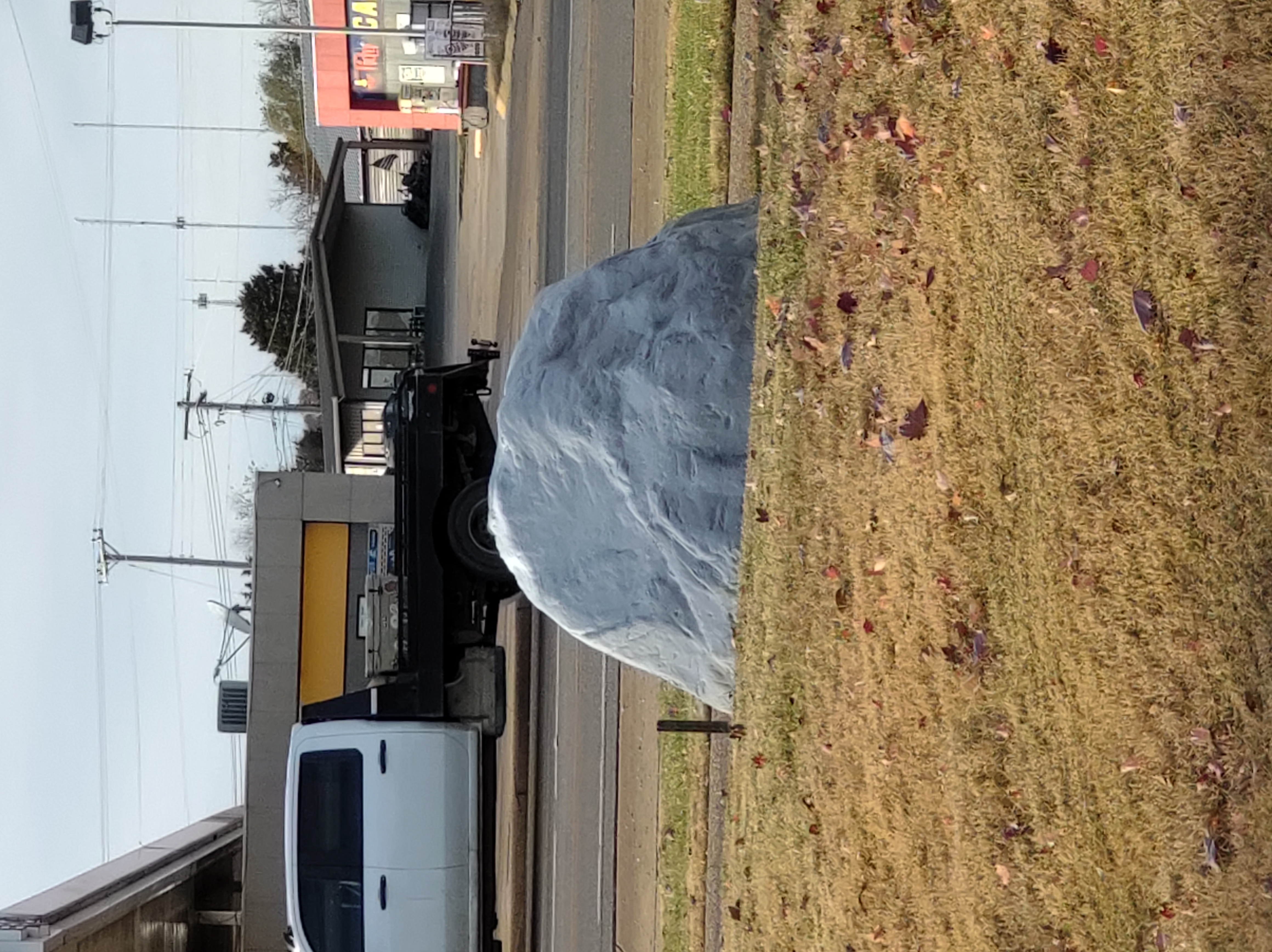
And so, on this day, those pilgrims wish you and yours a Happy Thanksgiving, as each and every one of us follow our internal compass.
WRITTEN Nov 21, 2021 at 09:51 AM
TAGS: thanksgiving
SHARE: Facebook Twitter Email
Budgeting Your Provisions
Provisions are your lifeline for the full time RV lifestyle. Food, water, fuel, and other general merchandise is always very important. However, it's also necessary to consider several factors when budgeting for your provisions, because it's a bit different from the comforts of a traditional house or apartment.
One of the obvious budget factors is cost. However, this one's a little different because you may not be too familiar with where you're heading. You may end up in a small town with a grocery store that has high prices, if there's even a grocery store nearby at all, which can happen in more rural areas. When figuring out a budget for groceries, also factor in the fuel it takes to get there. Obviously you'll be light with your tow vehicle, but how much are you saving if you have to drive 50 miles each way to a national discount chain, compared to the overpriced grocery store down the road? Some call it spending dollars to save nickels. It may be worth it if you budget correctly, though. Figure out what works best for you.
Budgeting your provisions isn't all about the Benjamins. You're in smaller quarters with your RV when compared to a house or apartment. Bulk warehouses may be nice when you're stationary, but are you going to have room for everything if you get large quantities? Depending on what it is, you may or may not be able to store it. The propane savings are certainly enticing if you have transportable canisters, as well as the lower gas prices, but how much else are you saving, and can you cover the annual fee? This isn't limited to the warehouses, either. If you're going to "stock up" on one of the longer trips to the discount store, how much of that will you be able to store? Are you going to need ice for your cooler to bring it home?
One other big thing to think out, when budgeting those provisions, is time. Mobility is a great strength for the full-time RVer, but it can also be a hindrance. Are you going to be able to use up all your perishables before you hit the road? Can some of them come with you in your towing truck? Meats are going to be a concern if you eat those. Have you prepared and frozen all of them prior to leaving? Maybe you have your pantry well stocked. Is that going to shift around, even if you have stabilizing rods? Are you thinking about using a well-stocked pantry to prevent shifting? You may be able to run your refrigerator off propane while driving, which could help with some quick lunches along the drive, but other things may be too complex.
Wherever you are and whatever you're doing while following your internal compass, it's important to be prepared. Have a plan going in, make the most of what you get, and enjoy life on the road.
WRITTEN Nov 14, 2021 at 11:50 AM
TAGS: rv living
SHARE: Facebook Twitter Email
Ozark National Forest
When many think about the midwest, they'll think of corn and wheat fields. Others will think about barbecue. There are a few, though, that will consider an up-and-coming mountainous area of this country.
Introducing the Ozark National Forest, otherwise known as the Interior Highlands of the United States. The Ozarks are mostly situated in Northern Arkansas and Southern Missouri, with a slight extension into Oklahoma and Kansas. Access to the Ozarks is limited in terms of interstate highways, but can be reached from United States routes 65 and 67 to the north and south, as well as through Missouri on U.S. Route 60, and through Arkansas along U.S. Route 62, famous for being the only east-west signed highway to connect, save for a couple blocks, the Mexican and Canadian borders.
If you enjoy the great outdoors, the Ozarks are certainly for you, as there are a vast amount of mountains and lakes to enjoy. Head to Northern Arkansas and visit the Buffalo National River. Designated as the first National River in the 1970s, this area is maintained by the National Park Service. If fishing is your cup of tea, perhaps head to the twin lakes of Norfork and Bull Shoals. Plenty of hunting grounds also exist across the national forest. RVers may also have heard rumors of the famed campgrounds built by the United States Army Corps of Engineers, or CoE. This organization set aside dozens of grounds within the Ozarks for visitors to be able to enjoy these vast highlands, both for camping at an economical price, as well as day use.
Perhaps you're more of a city-goer. Never fear, within the Interior Highlands are a few places for you. The Springfield Plateau, one of the regions of the Ozarks, is named after the largest city in this area, Springfield MO. If you enjoy live theatre, you may want to head a little south to Branson MO, sometimes called the Broadway of the west. Head down into Arkansas to the famous city of Bentonville AR. It was here that the Walton family owned and operated a general store that soon expanded to become the internationally renowned retail establishment known as "Wal-Mart".
No matter how your internal compass is wired, the next time you're in the southern central United States, it may just lead you to a wonderful time in the Ozarks.
WRITTEN Nov 07, 2021 at 10:43 AM
TAGS: trip 9, arkansas, missouri, oklahoma, kansas
SHARE: Facebook Twitter Email
Moving Day: How We Do It
One of the effects of full-time RVing is, unlike living in a house or apartment, we don't stay in one place for very long. Sometimes it's a few months, other times just a week, or even a couple nights. One of our social media viewers asked a few questions about what we have to do when it comes time for moving day.
First and foremost, recognize how much time you have. Some campgrounds have a relatively early checkout, and if you're not exactly one to enjoy a nice sunrise, you're probably going to want the night before leaving to pack at least some of your belongings. Try to get an idea of how long it takes to pack each "section" of your rig, such as the dining/living area, the kitchen, the bed and bathroom, your patio, and everything else you may have. Figure out what you need for the evening and the morning, and maybe everything else can get packed.
For us, moving around quite a bit in our first month of full-timing made our packing down to a science. Closets and cupboards are well stocked with both our non-breakable pantry and our knife set the night before leaving. Breakable and sensitive items, such as our electronics, office needs, and potent potables, are packed the night before and moved in the cab of the truck in the morning with us. Not only are they less susceptible to movement there, but can remain somewhat climate controlled. Our patio gets packed up at night, including the grill once cooking time is over. Some of our loose odds and ends that don't fit in the cupboards go into our tub and sinks for the ride in the morning. Once morning hits, after getting a shower, just move things into the truck, hook up, and be on our way.
Once we're on the road, it's important to remember, even if you drive your rig like a limousine, your things are going to move around a bit. Lock the refrigerator and freezer doors if, like us, you're lucky enough to have that. Bunks are good places to store heavier items, though you'll want to make sure it's somewhat secured with bungee cords or baby gates. Newer RVs will have good cabinet latches, so those should be fine on the trip. Just make sure they're closed. Some will go so far as to use bungee cords on their cabinets; it's up to you if you want to do that. Most importantly, before you pull out of your site, make sure that everything is as secure as you want it. Check, double check, and triple check if you want. The one time you miss something may result in disaster.
So the next time you're ready to move, have a plan. Don't be afraid to adapt and make changes if things don't seem to work out. Just make sure, as you follow your internal compass, you're able to bring everything safely with you.
WRITTEN Oct 31, 2021 at 08:45 AM
TAGS: rv living, qna
SHARE: Facebook Twitter Email
Park Review: River Delta Marina and Campground
Trip number eight saw yet another stay-over. This time, we found ourselves at Mobile County's River Delta Marina and Campground. Situated in Southern Alabama, this publicly-owned park served as a haven for us for three nights as we planned our next move for the winter.
Grounds: The park is located a few miles off Exit 22 of Interstate 65. Those who are using paper maps from a leading national brand should take warning, as this exit may not show even on the most recent maps, but it is there. The signage on the road only speaks of a marina and welcome center which can lead to slight confusion, but it is the same place. The city of Saraland is nearby for re-supply and restaurant opportunities.
Sites: There are 60 RV sites with full hook-ups, assorted between back-in and pull-through, along with a few cabins. There is a 30-day limit for stays. When reserving, credit and debit cards are not accepted, and there is a refundable cash-only deposit related to the state of the site. Many of the campsites are right next to the busy highway, which can be heard throughout the night. No map of the sites was available, but was easy enough to figure out. Each site is primarily grass, but there is small-to-medium gravel for the rig parking. Alcohol is strictly forbidden, but they permit it kept exclusively within your camper, as it is understood that some full-time RVers will carry it with them. An ant colony greeted us at the water spigot when going to hook, and the spigot is low to the ground, meaning a water filter needs to be placed rig-side.
Staff: The staff, although with an uncomfortable physical presentation inside the office, was generally friendly. Maintenance was helpful and kept the park in great condition, There was a security guard at the gate to handle check-ins and entrants when no one was at the office. Workers are government hired.
Amenities: If you enjoy boating, you're going to enjoy staying here. At the entrance to the park are prominent boat launches for both campers and day users to be able to spend time fishing or just relaxing on the river. Even if you don't have a watercraft, or being on the river isn't your thing, take a walk along the quarter-mile spur, a raised, platformed nature trail to view the delta, along with a houseboat presumably for fish cleaning, and maybe a few alligators. A small pond with fountain exists near the campsites, where you can see snapping turtles, and some patrons also enjoy fishing. Laundry facilities are found within the bathhouse at a reasonable price, and there is a pool and swing set to complete the set of things to do at the park.
Atmosphere: With the way our previous trip abruptly ended, we really needed a place to relax. This was certainly an easy-going place. Although very much a public park, it seemed like the quintessential southern home in the countryside. Although the rule signage was bordering excessive, which one would come to expect in a government owned site, it was a nice place to take a break near the start or the end of what could be a long journey to or from the Gulf of Mexico.
Overall, River Delta Marina and Campground receives an 8 out of a possible 10 rating. Despite all the site issues we had, along with what seemed like an attack of the ants, the saving grace for this park is the price. For what you get, what you pay is unbeatable. Even if only half the amenities were there, it would still give midwestern campgrounds a run for their money, and it's only an hour from a popular seashore. This is a good spot for a paid dock or even a short-term stay, but we would probably only stay again for as long as we did or shorter, hopefully with a different site.
WRITTEN Oct 24, 2021 at 08:13 AM
TAGS: trip 8, alabama, park review
SHARE: Facebook Twitter Email
Gasoline: Ethanol Percentages and Octanes
Think about the last time you went to the fuel pump. You probably looked at the price, and who doesn't. But did you notice everything else? What could those other things be doing to your vehicle?
The next time you're traveling, and you're at the gas pumps, look at the octane rating. For those using premium gasoline, you're already doing this, and the same goes for diesel. However, if you have your typical unleaded vehicle, make sure you're getting 87 octane or higher. In several states in and around the Rocky Mountains, specifically seen in Colorado, New Mexico, Wyoming, Utah, and parts of the Texas Panhandle, you might see regular unleaded, but it's rated at only 85 or 86 octane. Sure, vehicles tuned at the higher altitudes may be able to accept these lower octanes, but your vehicle probably won't. You'll start to get engine knocking and do some serious damage. So pay attention to those octanes, and don't ruin your ride.
Since the gas spike of the mid-2000's, refineries have started to mix ethanol with their gasoline. You have to be careful, because just like lower octanes, too much ethanol will ruin a vehicle's engine. In the first few years of its usage, there were some states, such as Iowa, that would offer 15% ethanol gasoline. This is way too much for a traditional engine, and will cause problems. The state has since reduced to 10% which is OK for the modern engine, but they still regularly offer ethanol-free gasoline at a decent price, as you'll see a hit in fuel economy with ethanol. Older engines were not designed to run with ethanol whatsoever, so they'll need pure gasoline. There are "FlexFuel" vehicles out there that could do it, but do make sure it's properly dispensed. Once again, pay attention to what's sold to you, and make sure your vehicle has been designed to handle it.
So the next time you make a long trip, watch what you put in your tank. Your internal compass may tell you to go somewhere, but always make sure you can get there safely.
WRITTEN Oct 17, 2021 at 12:37 PM
TAGS: travel
SHARE: Facebook Twitter Email
Sweet Home Alabama: The Southern Panhandle
Are you wanting to head west from a visit to Florida? Do you think you might not make it to the popular tourist destinations? Perhaps you should give Southern Alabama a try.
Situated along a small portion of the Gulf of Mexico is the panhandle of Alabama. Prior to its statehood, this area was once part of West Florida, alternating between English, Spanish, and independent control before eventually becoming an American territory. While in Alabama, visit the port city of Mobile along the bay of the same name, or head south to visit Gulf Islands National Seashore. Those loving the beaches and fishing will want to visit places such as Orange Beach, Palmetto Beach, or take the trek to Dauphin Island, seeing historic Fort Gaines.
If you're one that prefers to be more inland, yet you're a history buff, Southern Alabama has something for you. While the United States was busy fighting the War of 1812, its southern territories were in a bit of a quarrel themselves, the Creek Indian War. Starting as a civil war between the Creek and Cherokee nations, the American, British, and Spanish governments fueled the fires in an attempt to win control over the territory. Drive up to the small town of Tensaw and through the residential area to visit Fort Mims. This was the site of a massacre during the war, where the Creeks invaded a poorly defended fort, killing hundreds of innocent villagers in the area. Re-enactments and commemorations of the tragic event are held annually, with the grounds free and open to the public. If war history isn't your cup of tea, head to Stockton and visit Baldwin County Bicentennial Park. Honoring the 200th anniversary of statehood, this park contains an old homestead with a small schoolhouse to commemorate the state's first public school, along with a small church, nature trail, and veterans memorial.
Perhaps you aren't convinced to make a stop, and just want to drive by. The highway system in and of itself is quite impressive. Alabama features many long causeways traversing its vast swamp lands, allowing wildlife to continue living in these conserved areas. Between Creola and Stockton, take a drive across the awe inspiring General W. K. Wilson Jr. Bridge as it crosses three rivers with a waterway between the vehicle rights of way. Even if you want to just head west along the gulf, go across the Jubilee Parkway and through the George Wallace Tunnel as you approach Mobile, crossing both the bay and river.
Wherever your internal compass tells you to go, be sure to take some time to enjoy the Alabama Panhandle. Perhaps you may just find something for you.
WRITTEN Oct 09, 2021 at 07:38 PM
TAGS: trip 8, alabama
SHARE: Facebook Twitter Email
Travel Update: Light in the Dark Night
Some of our loyal viewers may be surprised to read that our first workamping trip, and what was supposed to be a long term stay, is already over. What gives? It's quite the story.
We were supposed to be spending the entire winter season workamping in Florida. It was an absolutely beautiful view right on the Gulf of Mexico, with laid back hosting and a great customer base. We were very fortunate to make a few good friends along the way, including our original supervisor who hired our services. Then came one of the great curve balls of business: A change in management. As the park is corporately owned, this isn't all that much of a surprise, since turnover happens in business all the time. However, responsibility for the campground abruptly changed in a hostile takeover, planned even before the "big wigs" arrived. A change in the expectations of the camp hosts followed, increasing hours and duties without any sort of additional compensation in return. Coupled with how some of those in the adjusted positions addressed us, as well as took "aggressive actions" against persons at the park and sometimes just on a whim, we knew it was not only our time to leave, but we would have to do so in the middle of the night to avoid destructive confrontation.
One great quotation we always carry with us is, "There is light even on the darkest nights." The last days of our first foray into workamping were quite dark. We won't go into details, but will say a number of the happenings in our final days of traditional home and salaried living were coming back to us. Many people live on the road to improve their own personal health and well-being. Our light, however, always exists, both in our hearts and on the highway. We can simply pack up and move towards that light. Sure, breaking contracts can have a negative connotation to come with it, but if the terms are going to change from our initial agreement, the original contract is void.
We aren't quite sure where we'll end up next. There are still a few more winter opportunities we're exploring. Although most of the RVing ways are done months in advance, cancellations come up all the time. Whatever happens, this entire adventure, as we always say, is about following our internal compass. Never let anyone place unbreakable chains upon you. And even if you see the chains, know that you always have the power to break them. Sure, you may see barriers, but these hurdles can always be overcome, one way or another. It may not happen overnight, and it will be arduous, but it is something you can do. As the late Jim Valvano once said, "Don't ever give up."
WRITTEN Oct 06, 2021 at 04:30 PM
TAGS: trip 7, trip 8, workamping
SHARE: Facebook Twitter Email
Two Months On The Road: A Look Back
Two months ago, we officially sold our house with a postage stamp for property, packed up our RV, and hit the road. As a little insider secret: One of the working titles we had for this blog was, "Our Two Month Not-So-Risk-Free Trial", documenting the process of buying a rig and traveling the country for a few months. With the laws at our old place, it wasn't feasible to do this long of a trip, and now that the house has been sold, there's no turning back. However, do join us as we look back on our incredible adventure.
Thus far, we've been two months, five trips, three time zones, and been through 19 states during that time. Some may remember, from our shakedown posts, that we mentioned how many arguments we had. Believe us when we say it hasn't been the limerence couples experience in the honeymoon phase. We've had our fair share of arguments. Some of the memorable spats include when we were driving in Iowa, realizing we were two days early, and didn't agree on how to use up that time. Also memorable were frustrations out of complications from staying in Missouri. Then there came the time when our connectivity plan went completely out the window. However, no matter the arguments, no matter how much we wanted to give up, we knew the one thing we would always truly have on this adventure is each other, and we can rely and depend on each other to get through this adventure.
In the last two months, there's so much we've seen. Basins, beaches, and bison barely scratch the surface. Rocket launches, river valleys, and the wide open road have been an amazing reward for our travels. Even just learning the history of where we go has provided a story not only to tell you, but also for our potential children in the future. One of our favorites in the last two months had to have been Custer State Park in western South Dakota, driving through to see the wonderful wildlife in their natural habitat. Even one of our most common trips from before the RV that we were able to do this time, Franconia Notch in New Hampshire, provided peace and tranquility in an otherwise bustling time when we had just begun, nearly tripping at the starting blocks.
Two months have given us our fair share of bumps and bruises. Little things like jamming a thumb in the door of the RV, dropping a sway bar on a nearly exposed foot, a hand being stuck in the commode while attempting to flush the black tank, and tripping over our dog fence, to massive sunburns while enjoying the beach. It wasn't limited to our bodies, either. Twice we thought we were going to lose our awning while it was open, rushing to pack it up as quickly as we could, sometimes forgetting steps along the way in a panic. Then came the black tank odors that only seemed to happen on one of our trips, but made our home nearly unlivable. Our little fur baby also had issues of his own, needing several trips to local vets, while finding previous doctors hadn't treated him properly.
Living on the road full-time has meant we had to make some personal sacrifices two months ago. No longer are we near our family and friends from the previous chapter of our lives. Some to which we weren't even able to say "goodbye" due to circumstance. Some were already used to the distance which made keeping in touch easy, while with others, we were able to develop much closer bonds during the transition. With each person, we find our own special way. Some find us through our social media outlets. Others are able to find us on this blog. We've even developed some communication ideas, such as sending postcards from our various destinations to our loved ones. Although we now live just about anywhere on our own, we always remember those special bonds we once had, and enjoy reflecting on those good times.
Many of you may wonder, as you read through our two-month memoir, what we would change if we had to do these two months over again. This question is always difficult, because if we were to visit our past and make a different decision, nearly everything leading to the present would also be affected. The biggest thing we would have changed was our preparedness when we first started. The last couple of weeks were rushing to pack what we still had from the house, constantly making trips to store our possessions, all while grieving the loss of one of our beloved pets. In addition, we would have fared much better had we trusted each other more, and been more understanding of each other's needs. Too many arguments stemmed from the different directions we wanted to take not only day-to-day, but also in our lives as a whole. The good news is, although changing the past is impossible and would otherwise be disastrous, we can use our past to help shape a better future and not only make better decisions, but also hope any future RVers can heed our advice and save themselves plenty of headache.
At the end of the two months, we're still alive, and our relationship has become so much stronger. We know that we can lean on each other and work together to be prosperous. Who knows how we will fare after another few months. We look forward to much more of this adventure, improving our lives as we go, and following our internal compass.
WRITTEN Sep 30, 2021 at 01:00 PM
TAGS: rv living
SHARE: Facebook Twitter Email
Emergency Planning
Everyone, regardless of where they live, either has or should have a contingency plan. Any number of things could happen, whether it be fires, weather, militia actions, or something else you could imagine. When living in the RV, this is no different.
Let's consider the immediate escape, where you have to abandon the RV. You'll probably want to pack a quick escape bag, which we've coloquially come to call a "go bag", and have it in your tow vehicle. Try to have one for everyone in your party. A few sets of clothes and travel toiletries should do. Maybe also add a few snacks, along with a flashlight and lighter. Don't forget your furry companion, either. You're going to want a food and water bowl for them, along with some food and water itself, maybe a couple toys to keep them occupied, as well as what you need to walk them around. You might be able to grab one or two quick personal items also, but that may be about it. The idea is that you get out of dodge for a small amount of time, and then come back to assess any damage. Just be aware, during hurricanes and the like, the government may prohibit you from accessing your property if you choose to abandon it, so your supplies will have to stretch.
Emergency planning isn't just about the quick escape. Sometimes, things will happen in general travels or stays where you need a contingency. Think about carrying some cash with you. We're talking maybe a hundred bucks or so; you don't have to empty your bank account. You may come across a fuel station or even a last minute campground that only accepts cash. One of your bank or credit cards may get cancelled, perhaps as a result of a ne'er-do-well putting a skimmer on a gas pump you used. And remember that you're not going to have a good chance to receive a new card in the mail unless you're stationary for at least a week.
Cash isn't the only thing of concern, because you may not be near anywhere where you can use that cash, so bring some supplies with you. RVers should already be somewhat prepared for boondocking trips, meaning you'll take propane, a generator with gasoline, a small camp stove with some basic cookware and a lighter, maybe some storable food as well. Water, however, is going to be the most precious commodity. Even with two people and a pup, you'll go through at least a gallon of water every day. If it's a hot and muggy day, it may even be more than that. Remember that it doesn't store as well as meals ready-to-eat (MREs) or long lasting storable food. You'll have to use it within a few months. Consider a rotation for a large cooler, whether or not there's ice. Except for extreme situations, such as burns and curing heat exhaustion, warm water is better than no water.
So while you're out there following your internal compass, know that it may lead you through a sticky situation. Just be prepared, and you should be able to make it just fine.